



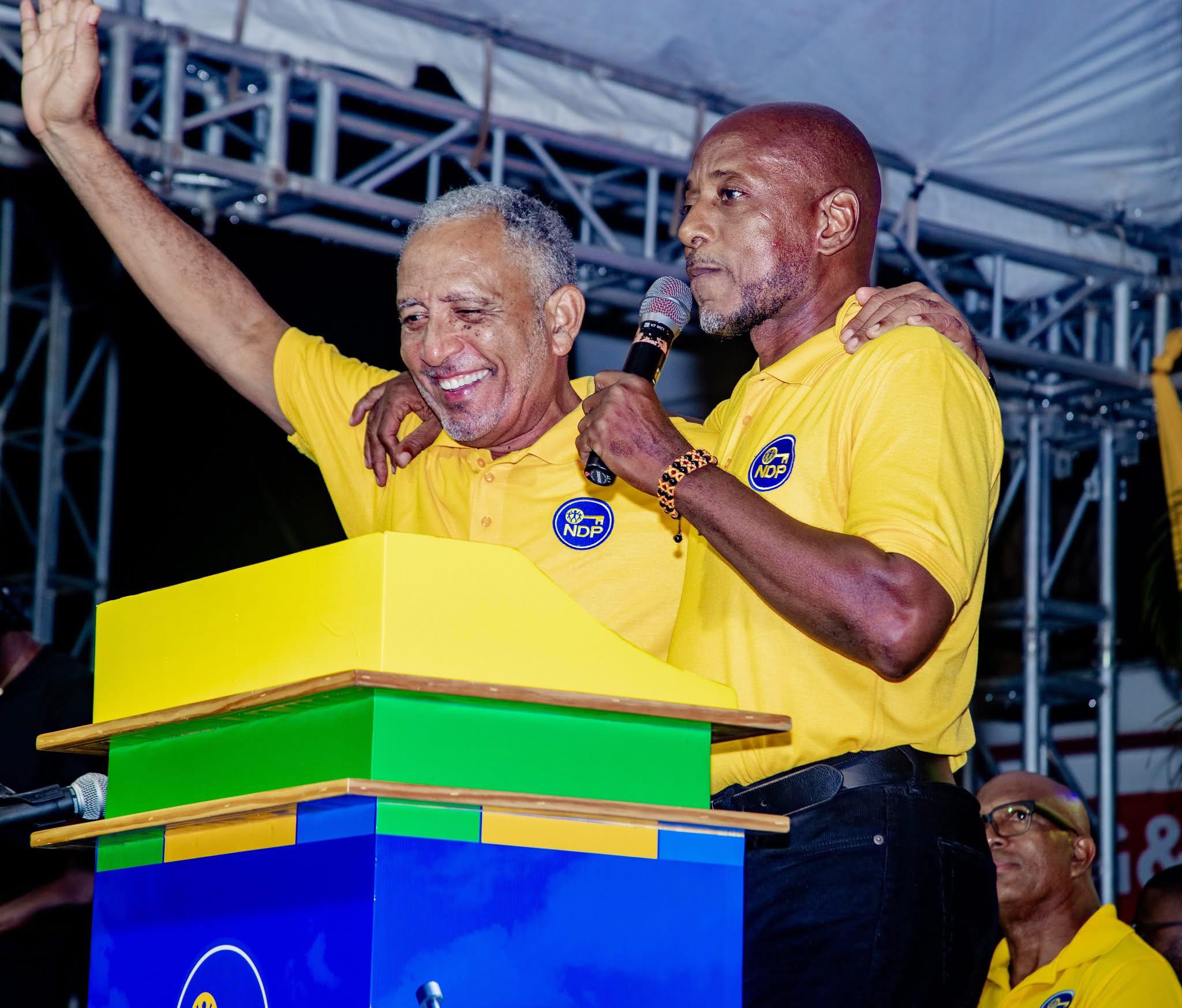
Prime Minister Godwin Friday appeared relaxed and unbothered as he exited the High Court in Kingstown on Thursday following a case management hearing related to election petitions filed by the opposition.
When approached by reporters outside the courthouse, the prime minister brushed aside the seriousness of the legal proceedings with a brief comment.
“It’s a beautiful day,” Friday said, pointing toward the clear skies overhead before directing the media to the government’s lead attorney for further comment.
The legal challenge has been brought by the opposition Unity Labour Party (ULP), which is contesting the eligibility of Friday and Minister of Foreign Affairs Dwight Fitzgerald Bramble.
The opposition claims both men allegedly hold Canadian citizenship, which they argue could disqualify them from serving as members of Parliament under the Constitution of Saint Vincent and the Grenadines.
Despite the challenge, the government’s legal team says the petitions are unlikely to change the outcome of the election.
Senior Counsel Anand Ramlogan, who is representing the prime minister and other government officials in the matter, described the hearing as straightforward and said the case will ultimately be decided by the law and the strength of the democratic mandate given by voters.
Friday’s New Democratic Party secured a decisive victory in the November 27, 2025 general elections, winning 14 of the 15 seats in Parliament and ending more than two decades of rule by the Unity Labour Party.
The NDP also received more than 10,000 votes more than its rival, marking one of the most significant electoral margins in the country’s modern political history.
Ramlogan suggested the legal challenge cannot undo the clear message delivered by voters at the ballot box.
According to the court’s schedule, the next hearing in the matter is expected in May, while the trial itself has been set for July 28 to July 30.
In the meantime, both sides are expected to submit evidence and comply with court directions before the case proceeds to trial.
The government has indicated that it wants the matter resolved quickly so the administration can continue focusing on national affairs.
Speaking separately outside the courthouse, attorney Stuart Young, who is representing the Unity Labour Party, said the case raises an important constitutional question about eligibility for elected office.
Young said the court will ultimately determine how provisions in the country’s constitution apply when a candidate may hold citizenship from another country.
Legal disputes involving dual citizenship have surfaced in several Caribbean jurisdictions in recent years, though constitutional provisions differ from country to country.
Young noted that the ruling in this case could clarify how such rules are interpreted in St. Vincent and the Grenadines and could set an important precedent for future elections.
The petitions were filed by opposition candidates who contested the constituencies during the November 2025 election. They are challenging the nomination of the candidates as well as the actions of election officials who accepted those nominations.
Election petitions are not uncommon in the region, but legal experts note that overturning the outcome of a national vote is rare and typically requires clear constitutional violations.
For now, the dispute has moved from campaign platforms to the courtroom, where judges — rather than voters — will decide the legal arguments being put forward by both sides.
While the opposition hopes the court will provide clarity on constitutional eligibility rules, the government remains confident that the overwhelming electoral victory delivered at the polls will ultimately stand.


