


Three weeks into office, the New Democratic Party administration has placed cost-of-living relief firmly at the centre of national discussion, rolling out early measures that many Vincentians say they have not experienced in decades.
The claim that the NDP has done “more in three weeks than others did in 25 years” is not a statistical verdict. Rather, it reflects a growing public perception shaped by visible, immediate actions—rather than long-term promises that often fail to materialise.
The most concrete example came today Friday, December 19, with the implementation of a VAT-Free Day. Shoppers will pay less at the register, families will be able to stretch limited budgets. In a period marked by rising food prices and mounting household expenses, the impact—though temporary—was tangible.

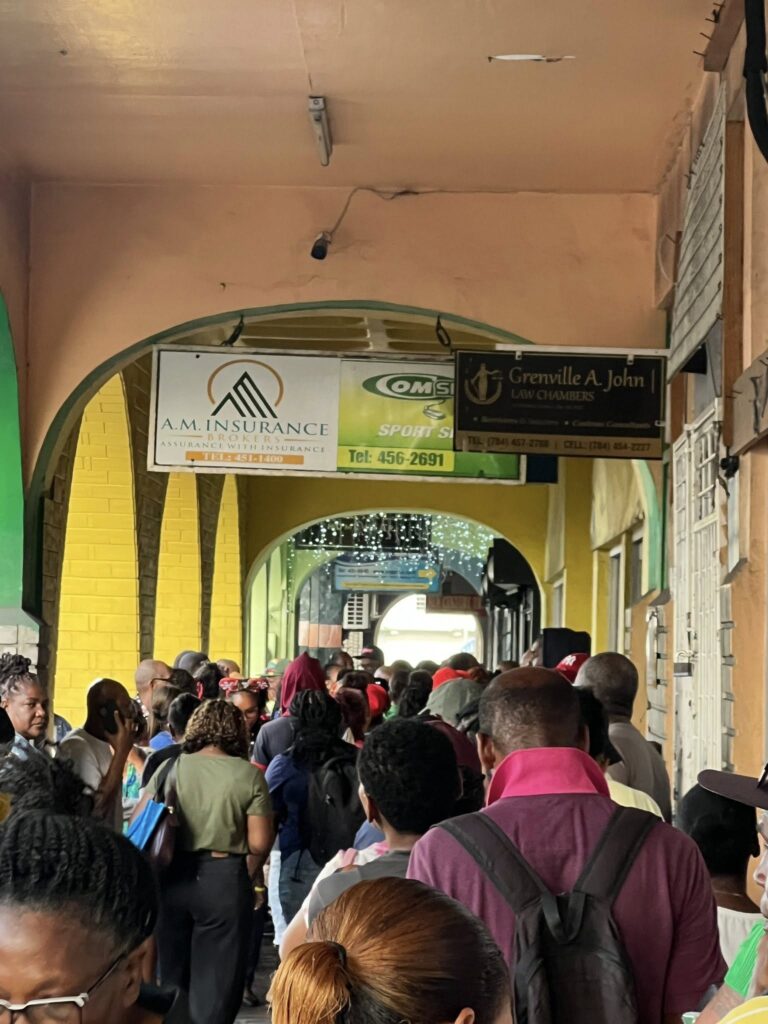
By contrast, cost-of-living measures under the previous ULP administration were largely limited to temporary interventions, including a 3 per cent allowance spread over three months and announced late in the government’s term, shortly before the general election. While that measure offered some relief, it did little to alter the broader financial pressure faced by households.
Public servants have also noted the timely payment of salaries, easing concerns that had quietly grown across the service. While salary payments are expected, consistency matters in an economy where many workers live month to month. The early signal from the new administration has been one of operational stability and continuity.
Another issue closely linked to cost of living is the reinstatement of public servants dismissed under the COVID-19 vaccine mandate. For those affected, dismissal meant the sudden loss of income and financial security. The government’s decision to begin the reinstatement process represents direct economic relief for families who have spent years without stable employment. In practical terms, this is not simply a political adjustment—it is a cost-of-living intervention.
No discussion of economic relief would be complete without addressing the ongoing debate surrounding a so-called “double salary” for public servants. Since the election, public discourse has been dominated by accusations that the government failed to deliver on a promise. However, a review of campaign statements shows that the NDP did not explicitly promise a double salary. What was consistently promised was relief for public servants and recognition of the economic strain they face.
The distinction is important. While expectations have undoubtedly grown, some of the current outrage appears to be driven as much by post-election interpretation and political rivalry as by clear campaign commitments. That said, expectations—once formed—do not easily fade, and the government now faces pressure to clearly outline its position, timelines, and fiscal constraints.
For many Vincentians, comparisons with the past 25 years are rooted in lived experience. Over time, the cost of living rose steadily, while wages remained largely stagnant and tax relief limited. Outside of occasional one-off payments, sustained cost-of-living intervention was rare.
That is why the current actions, though modest in scale, feel significant. They represent movement.
In just three weeks, the NDP government has implemented a VAT-Free Day, maintained stability in public service salary payments, initiated the reinstatement of dismissed workers, and elevated cost-of-living relief as a central policy focus. These are measures already being felt, not proposals awaiting approval.
Whether this early momentum develops into lasting change remains to be seen. But for now, the public mood suggests a noticeable shift in approach—one that has placed cost-of-living relief back at the forefront of national priorities.
This commentary is based on publicly available information and political developments. It reflects the opinion of the writer and does not represent the official position of Cliplet News.
