

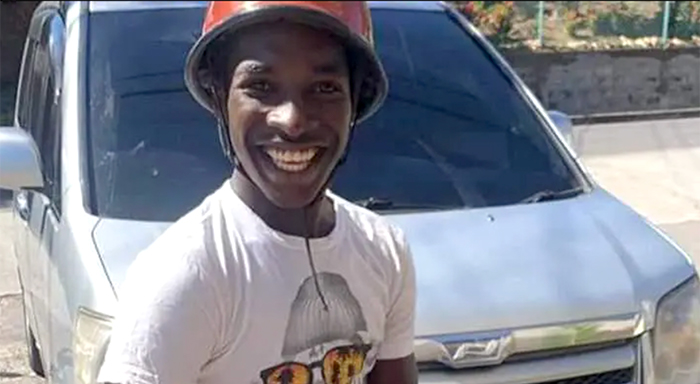
More than three years after 18-year-old Cjea Weekes died following a police encounter in Calliaqua, the official record says no crime was committed.
An inquest has ended. A verdict of death by misadventure has been returned. The Director of Public Prosecutions has indicated that criminal liability does not arise. And yet, for many Vincentians, the case still does not feel settled.
The question persists: how did a healthy teenager end up paralysed and dead days after interacting with police, with no one held criminally responsible?
A night that changed everything
In early February 2022, Weekes was riding a motorcycle when police attempted to stop him. What happened next remains contested.
Police accounts suggested that the teen was injured after falling from his motorcycle. Weekes’ family, however, has consistently said that he told them he was run over by a police vehicle.
What is not disputed is the outcome. Weekes was left critically injured and paralysed. He later died at the Milton Cato Memorial Hospital.
From the outset, the incident raised public concern. The involvement of police, the severity of the injuries, and conflicting versions of events placed the matter firmly in the national spotlight.
The promise of the inquest
An inquest was expected to bring clarity.
Instead, the process itself became part of the controversy.
In March 2023, a coroner discharged a jury before any evidence was heard, citing uncertainty over whether the coroner would remain in office to complete the case. The decision added months of delay and deepened frustration for the family and the public.
When the inquest eventually resumed and concluded, it did so quietly, without the dramatic revelations many had hoped for.
The verdict: death by misadventure.
In legal terms, the finding meant that Weekes’ death was ruled accidental, and that those involved bore no criminal responsibility.
Evidence questions that linger
One of the most troubling aspects of the case involves civilian evidence.
During the inquest, testimony was given that a civilian witness had recorded photos and video of the incident scene on her mobile phone. According to evidence relayed by the Weekes family’s attorney, the phone was later handed over so its contents could be copied.
The phone, it was said, never worked again.
Only still images were eventually produced. The video was not shown in court.
No public explanation has been given for what happened to the video, whether it was extracted, or whether it still exists.
For critics of the process, this gap matters. Video evidence has the potential to confirm or contradict accounts in ways testimony cannot.
The DPP’s position
Before the inquest concluded, the Director of Public Prosecutions formed the view that the evidence did not support criminal charges.
That position — made public while an inquest was still anticipated — also drew criticism. Some attorneys questioned whether expressing such a view in advance could influence how proceedings were perceived or conducted.
Still, the DPP’s stance now aligns with the inquest’s outcome: no criminal liability.
Closure for the state, not for everyone
For the state, the legal process appears complete.
For the Weekes family, and for many members of the public, it is not.
Questions remain about:
- whether all available evidence was fully examined;
- whether the inquest was equipped or inclined to test official versions of events;
- and whether the legal standard of “misadventure” adequately addresses deaths involving law enforcement.
The family has signalled that their pursuit of answers may continue through civil proceedings, including a possible wrongful death claim.
A wider issue
The death of Cjea Weekes has come to represent more than a single case.
It sits within a broader conversation about police accountability, transparency, and the limits of inquests in cases involving state actors.
When a young person dies after a police encounter, and the final word is that no crime occurred, the public is left to decide whether justice has merely followed the law — or whether the law itself has fallen short.
Years later, that unease has not faded.
And that may be the most enduring legacy of the Cjea Weekes case.
