

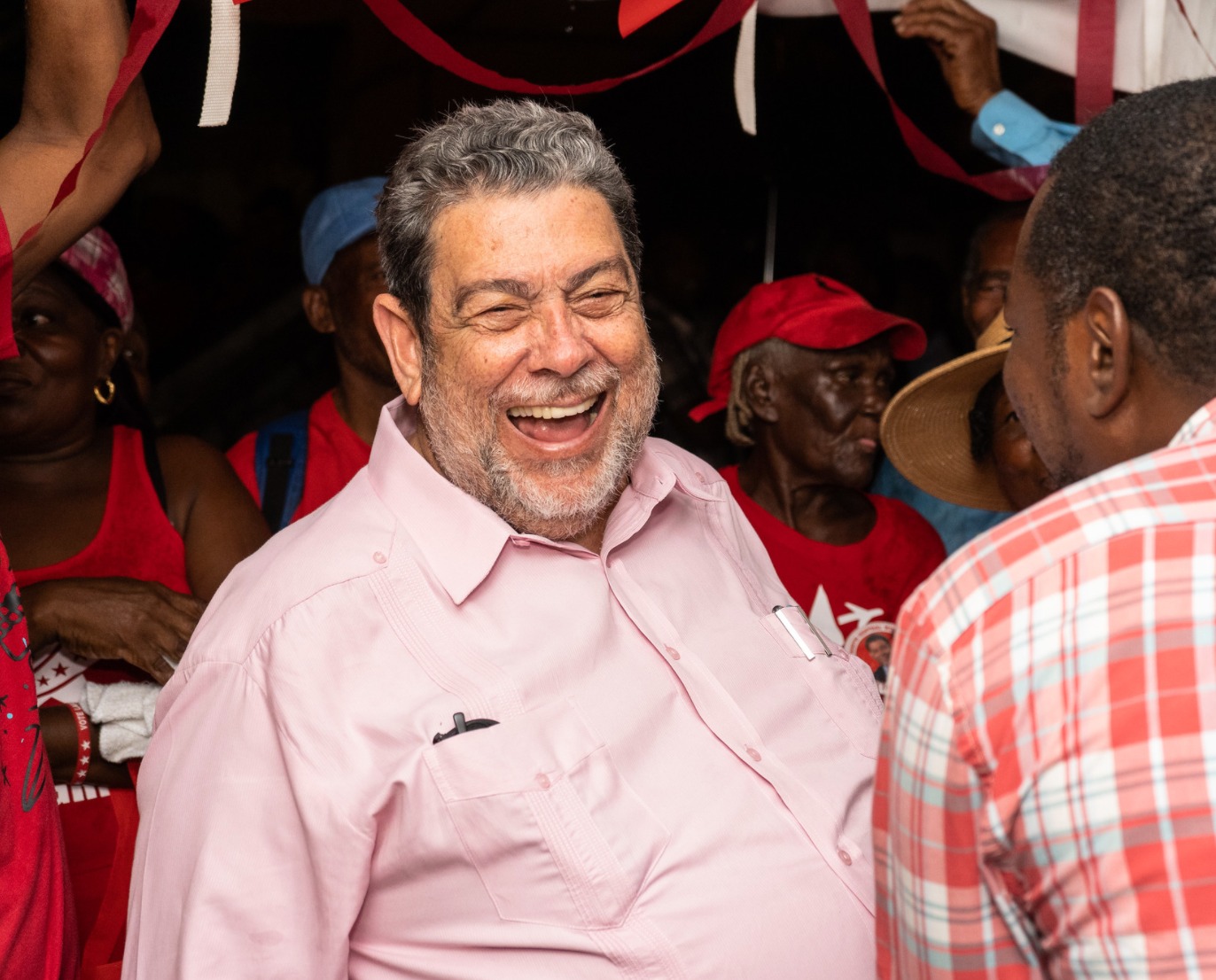
Following the Unity Labour Party’s heavy defeat in the recent general election, questions are growing about the political future of former Prime Minister Dr. Ralph Gonsalves and whether he intends to remain active in frontline politics.
Dr. Gonsalves, who led the country for nearly twenty-five years, is now the only remaining Member of Parliament for the ULP after the New Democratic Party secured fourteen of the fifteen seats in Parliament. While his party was swept from power nationally, Gonsalves retained his long-held seat in North Central Windward.
The scale of the loss has shifted public attention beyond the election results themselves and toward what comes next for the veteran political leader. At the centre of the discussion is whether Gonsalves plans to contest another general election or eventually step aside, allowing new leadership to emerge within the party.
So far, Dr. Gonsalves has made no public statement outlining his intentions. There has been no announcement on retirement, no indication of a future candidacy, and no formal succession plan disclosed by the Unity Labour Party. That silence has only added to speculation, both within political circles and among the wider public.
Political observers note that age and timing will inevitably factor into any decision. At nearly 80 years old, Gonsalves remains an experienced and influential figure, but the party he once led into multiple election victories now faces the task of rebuilding from a historic defeat.
Many analysts point to a combination of factors behind the ULP’s collapse at the polls, including cost-of-living pressures, economic challenges, voter fatigue after prolonged one-party rule, and growing calls for political renewal, particularly among younger voters. For many Vincentians, the election signalled a desire for change rather than a rejection of any single individual.
Against that backdrop, Gonsalves is widely seen as standing at a crossroads. He could choose to remain in Parliament and seek another term in North Central Windward, positioning himself as a stabilising force in opposition. He could also opt to serve for a shorter period before stepping aside to make room for new leadership. A quieter role, offering guidance from behind the scenes, is another possibility being discussed.
For now, however, these possibilities remain speculative. What is clear is that any decision taken by Dr. Gonsalves will have a significant impact on the future direction of the Unity Labour Party and the shape of opposition politics under the new NDP-led government.
The election marked the end of a long political era in St. Vincent and the Grenadines. Whether Dr. Ralph Gonsalves chooses to remain at the centre of national politics or begin a gradual exit is a question that remains unanswered — and one that continues to draw national attention.
Attempts to obtain comment from the Unity Labour Party on Dr. Gonsalves’ future plans are ongoing.
