



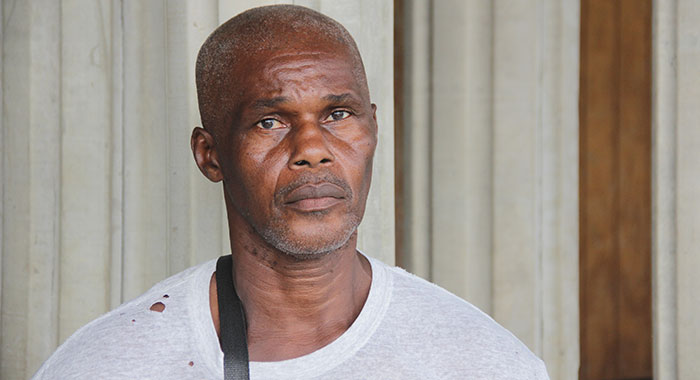
On the afternoon of April 13, 2021, as La Soufrière’s ash darkened the sky, 60-year-old businessman and block-maker Cornelius John sat on the unfinished porch of his Diamond Estate home. What happened next has been retold many times in interviews, courtrooms and political platforms — but for John, the core of the story remains simple: he was shot in his own yard, and four years later he believes justice has never truly come.
The “Cornelius John matter”, as it is now known across St Vincent and the Grenadines, has become more than a single criminal case. It is a test of public faith in the rule of law, in the independence of the justice system, and in whether ordinary citizens can get a fair hearing when the powerful are involved.
The Night at Diamond Estate
According to John’s account, given to multiple media houses, three people — two men and one woman, masked and wearing caps — came onto his property on April 13, 2021. He says one of the men kicked him repeatedly in the stomach and chest, and another shot him in the leg, leaving him bleeding on the ground. The woman, he alleged, pointed a firearm at him and threatened him.
In that moment, the Diamond Estate farmer and businessman went from citizen to crime victim. But in the months and years that followed, he would also become a defendant, a political symbol, and for many Vincentians, a living reminder of how power can bend — or appear to bend — the scales of justice.
High-Profile Names Enter the Story
Very quickly, this was no longer just a local shooting. Reports emerged that government senator and Deputy Speaker of the House of Assembly, lawyer Ashelle Morgan, and Assistant Director of Public Prosecutions (ADPP) Karim Nelson were allegedly present at John’s home when the shooting occurred.
The idea that a sitting senator and a senior prosecutor could be involved in a private citizen’s shooting electrified public opinion. Opposition Leader Dr Godwin Friday called for a special prosecutor, arguing that public confidence required an investigation and prosecution free from any perception of conflict of interest.
The Director of Public Prosecutions (DPP) later announced that three people would be charged arising from cross-complaints:
- Karim Nelson – charged with unlawfully wounding Cornelius John and unlawfully discharging a firearm at him.
- Senator Ashelle Morgan – charged with assault with intent to commit wounding, in relation to a complaint by John.
- Cornelius John himself – charged with using threatening language towards his wife and towards Senator Morgan.
In effect, the shooting victim was placed on the same level as his alleged assailants in the eyes of the law — something that has troubled many observers ever since.
A Trial Full of Drama — Then Acquittals
From the start, the case was unusual. The Calliaqua Magistrate recused herself, and a different magistrate, Bertie Pompey, eventually presided. A special prosecutor from St Lucia, Deputy DPP Stephen Brette, was brought in, precisely to answer public concerns about independence.
During the November 2021 trial, the public heard contrasting narratives:
- John described being shot, beaten and threatened at his home.
- Witnesses gave evidence that defence lawyers complained amounted to “trial by ambush”, accusing the prosecution of disclosing some elements late.
- An orthopaedic surgeon told the court that medical notes from the hospital recorded only a leg wound, with no abnormal findings to John’s head, neck, abdomen or lungs — a detail seized upon by the defence to challenge parts of his account.
At the close of the prosecution’s case, defence attorneys for Morgan and Nelson made no-case submissions, arguing that the evidence did not meet the threshold to put their clients on defence. Magistrate Pompey agreed and upheld the no-case submissions, effectively acquitting both Morgan and Nelson of all charges.
Just days later, the case against John — that he had used threatening language towards Morgan — was dismissed without going to trial after Morgan withdrew the complaint. The charge that he used threatening language against his wife was also eventually dropped.
Legally, the matter seemed to be over. But for many Vincentians, it was only then that the real questions began.
“Justice for a Chosen Few”?
The outcome triggered anger and disbelief in some quarters. The opposition New Democratic Party (NDP), in a statement titled “Is justice only for a chosen few in SVG?”, argued that the acquittals after a no-case submission would deepen public doubts about whether the law applies equally to ordinary citizens and to the politically connected.
While the court made a finding that there was insufficient evidence to proceed, critics have stressed that legal outcomes do not always resolve public perceptions — especially when the people cleared are a senior prosecutor and a government senator.
For John himself, the sense of unfinished business has been personal and painful. In media interviews, he has repeatedly said he is “awaiting justice”, describing difficulty walking, inability to work as before, and emotional trauma from being attacked at his own home.
Four years after the shooting, anniversary reflections in local media still describe his ordeal in stark terms — shot, beaten, and threatened on his own premises — and raise the same unresolved questions: Who actually pulled the trigger? And why has no one been held criminally responsible for wounding him?
What the Court Decided — and What It Didn’t
It is crucial to be clear about what the court did and did not say.
- The magistrate’s ruling did not declare that John shot himself, or that no crime occurred.
- It also did not formally identify any other person as the shooter.
Instead, the court found that the prosecution’s evidence did not reach the standard required to put Morgan and Nelson on their defence for the charges they faced. In criminal law, that threshold is high: guilt must be proven beyond a reasonable doubt. Where the evidence is inconsistent, incomplete or unreliable, a no-case submission is sometimes upheld.
But the criminal standard of proof is not the same as historical truth, nor does an acquittal automatically restore public confidence. That tension — between the technical outcome in law and the lingering sense of injustice — is at the heart of the Cornelius John story.
Power, Institutions and Trust
The case has exposed several fault lines in Vincentian public life:
1. Perception of Two Justice Systems
When a private citizen is shot, and the only people ever charged and placed before the court are that citizen, a senator and a senior prosecutor — with all parties eventually cleared — many will understandably ask if there is one justice system for the powerful and another for the powerless. Opposition leaders and civil society voices have warned that the appearance of political protection can be as damaging as actual corruption.
2. Conflicts of Interest and Independence
Because the Office of the DPP employs one of the accused (Nelson), and the other accused (Morgan) is part of the governing side of Parliament, extraordinary care was needed to avoid even the perception that the investigation or prosecution might be compromised. The appointment of a special prosecutor from St Lucia was one attempt to address this, but for some critics, it came late and did not fully heal the suspicion.
3. Treatment of Victims
John’s supporters argue that he was effectively revictimised: first by being shot and injured, then by being charged with threatening language, and finally by seeing no one convicted for wounding him. His case highlights broader questions about how victims of violent crime are treated — especially when they stand across from influential figures.
Four Years Later: The Human Cost
On each anniversary of the shooting, articles and commentary resurface, reminding the public that the man at the centre of the case is not a political slogan but a husband, father, neighbour and tradesman whose life changed in an instant. Reports describe lingering physical effects from the leg injury and ongoing economic hardship.
Meanwhile, the names of the better-known figures in the case — Morgan and Nelson — have continued to appear in public life and legal circles, their legal troubles behind them after the 2021 acquittal.
For many in Diamond and beyond, this contrast is hard to ignore: the powerful move on, while the man who was shot still limps, literally and figuratively, through the consequences.
A Case File Closed, But a Debate Still Open
Legally, the file on the Cornelius John criminal matter may be closed. The DPP has not signalled any intention to bring new charges, and there has been no successful civil action publicly reported to date. The court has spoken; the verdict stands.
For Cornelius John, the answer seems simple: until someone is held responsible for the bullet that went into his leg on April 13, 2021, justice has not been done — at least not in the way he understands it.
For the state, the answer is more technical: the matter has been prosecuted, adjudicated, and concluded according to law.
Between those two positions lies a wide gap — one measured not in pages of legal transcripts, but in public trust. How St Vincent and the Grenadines chooses to close that gap, or whether it chooses to at all, may determine how future generations remember not only the man from Diamond Estate, but the justice system that failed, in his eyes, to protect him.


