



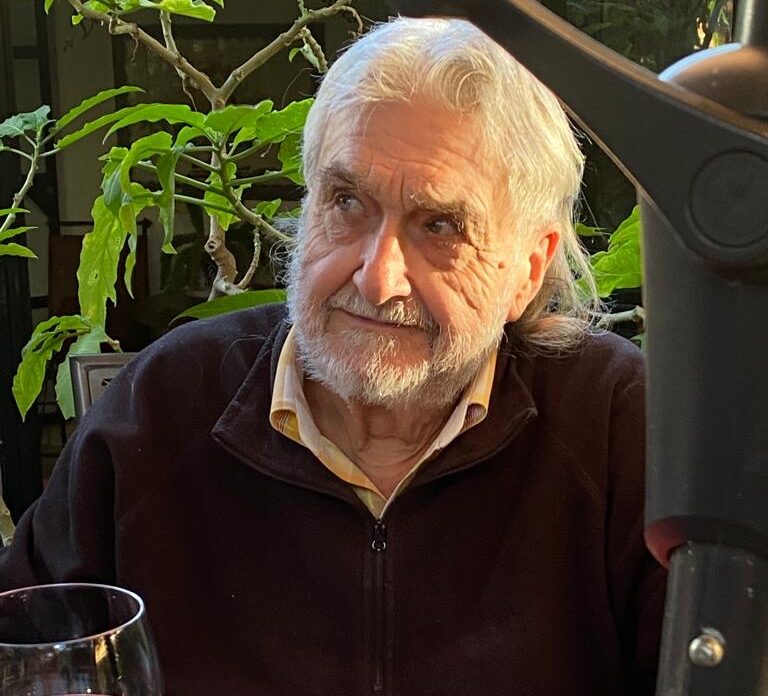
An elderly dual national of Saint Vincent and the Grenadines and the United Kingdom says he has been forced into years of effective exile after what he alleges was a politically motivated police operation that stripped him of his property, his safety, and his right to return home.
William H. Harriss, 82, says he has spent the past six years living abroad in fear, unable to return to his home in Ratho Mill, St Vincent. He alleges that in 2019 police raided his house using a search warrant obtained with false information, confiscated his personal belongings, and then disappeared from all communication, leaving him without charges, explanations, or legal remedies.
According to Harriss, the raid was conducted by a large contingent of officers, some in uniform and others in plain clothes, arriving in multiple vehicles and visibly armed. He says the warrant claimed police were searching for firearms, ammunition, drugs, electronics, and documents. Harriss, who says he has never had a criminal record of any kind, believes the inclusion of weapons and drugs was a pretext to justify a search aimed at seizing his research materials.
Harriss maintains that the true focus of police interest was historical research he was conducting into colonial-era Portuguese records. His work examined documented accounts from the 15th century involving Antão Gonçalves, a Portuguese navigator historically recorded as having captured and transported Africans to Portugal in the 1440s—events widely recognised by historians as among the earliest acts of the Atlantic slave trade. Harriss says his manuscript explored whether then Prime Minister, Ralph E. Gonsalves, shared ancestral links to the Gonçalves family name found in those records. He stresses that the material he researched is drawn from established historical sources and that researching or writing about such history is entirely lawful.
During the raid, Harriss says police seized his laptop, printer, camera, mobile phone, personal files, and documents. He alleges officers refused to provide a copy of the search warrant or an inventory of seized items. When he asked to photocopy documents, he says police instead confiscated his printer-scanner. He was allegedly promised copies of the warrant and property list within days. Six years later, he says, nothing has been returned and no documentation has ever been provided.
Harriss states that at no time was he arrested, cautioned, interviewed, or charged. He says police never followed up the raid with any questioning or explanation, yet retained all of his belongings. Over the following years, he claims repeated emails and written requests for the return of his property were ignored.
Two weeks after the initial search, Harriss alleges a second, more alarming incident occurred. He says two men in plain clothes entered his home before dawn without a warrant. Fearing for his life, Harriss fled the country shortly afterwards. He claims that during his escape he suffered serious spinal injuries and spent months recovering. He further alleges that he was later tracked while abroad, forcing him to move again. These claims have not been independently verified.
Since leaving the country, Harriss says he has lived in constant fear of returning. He believes that if he goes back to Saint Vincent, he risks being detained or killed. He alleges that police have now altered their email systems to block his correspondence entirely, cutting off his last remaining avenue of communication. A formal complaint submitted to the Police Complaints Department, he says, has gone unanswered.
Cliplet News sought comment from relevant authorities but had not received a response at the time of publication.
Now in his eighties, Harriss says the ordeal has left him isolated, dispossessed, and unable to spend holidays with family or friends in St Vincent. He is currently completing a book detailing his experiences, including what he describes as institutional silence from police, politicians, lawyers, and media organisations. He says the book will document not only the raid and its aftermath, but also the refusal of authorities to answer him over six years.
At its core, Harriss’s appeal is straightforward: the return of his seized property, an explanation for the police actions taken against him, and an independent examination of whether his constitutional and human rights were violated. Until those questions are answered, he says, he remains a citizen without a country he feels safe to return to.


