



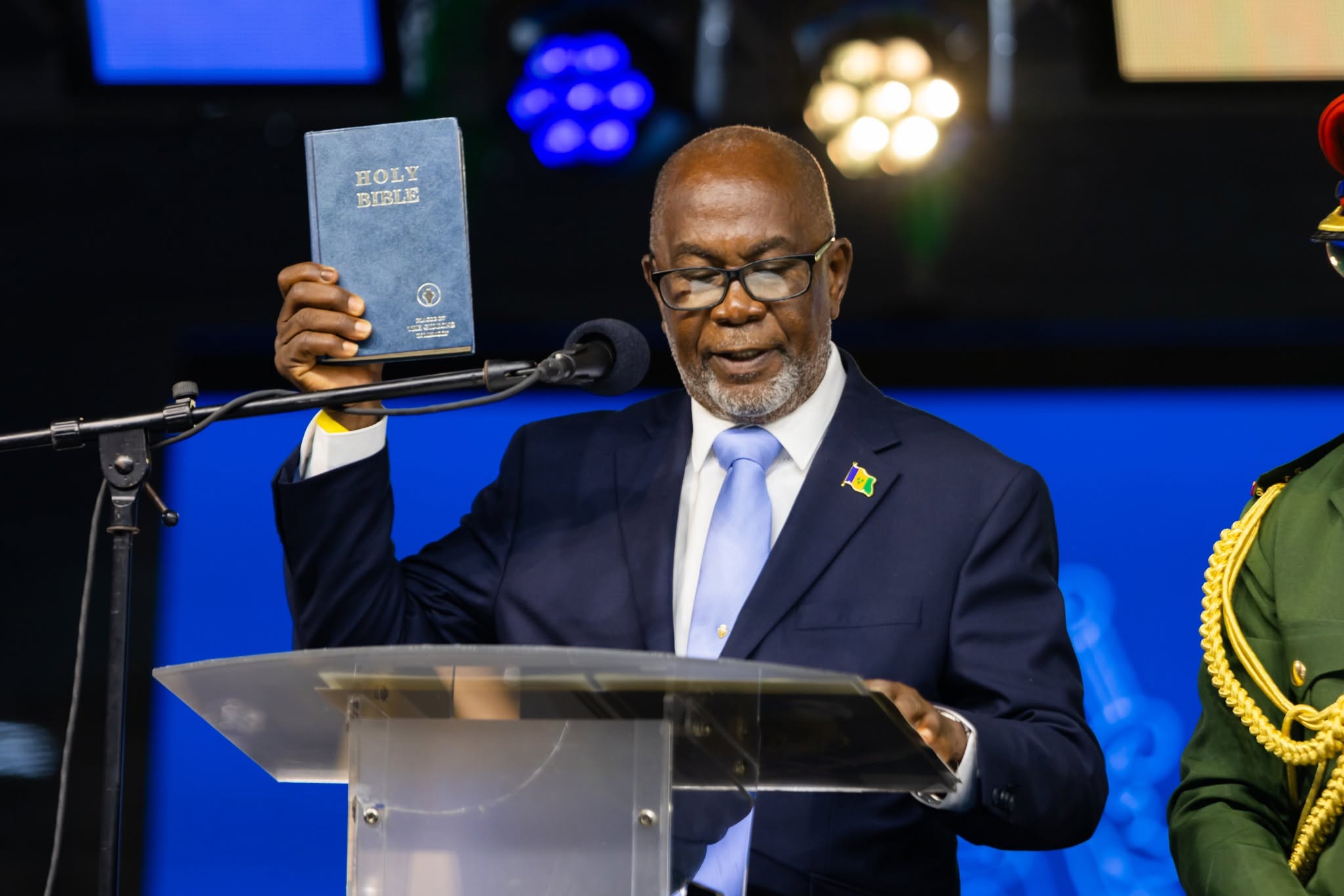
Prime Minister Godwin Friday’s political future is back under scrutiny as the High Court prepares to resume hearing the election petitions challenging his victory in the Northern Grenadines.
The case returns on August 31 2026, with the petitions against Friday and Foreign Affairs Minister Dwight Fitzgerald Bramble entering another stage after three days of hearings in July.
At stake is more than two parliamentary seats.
The petitioners — unsuccessful ULP candidates Carlos Williams and Luke Browne — are challenging the eligibility of Friday and Bramble to contest the November 2025 general election, pointing to their Canadian citizenship and the constitutional provisions governing allegiance to a foreign state.
Friday’s NDP won 14 of the 15 elected seats in that election, ending 25 years of ULP rule and giving the new government one of the strongest parliamentary majorities in SVG’s history.
Friday remains prime minister. Neither petition has been decided, and there is no court order preventing either man from continuing in office.

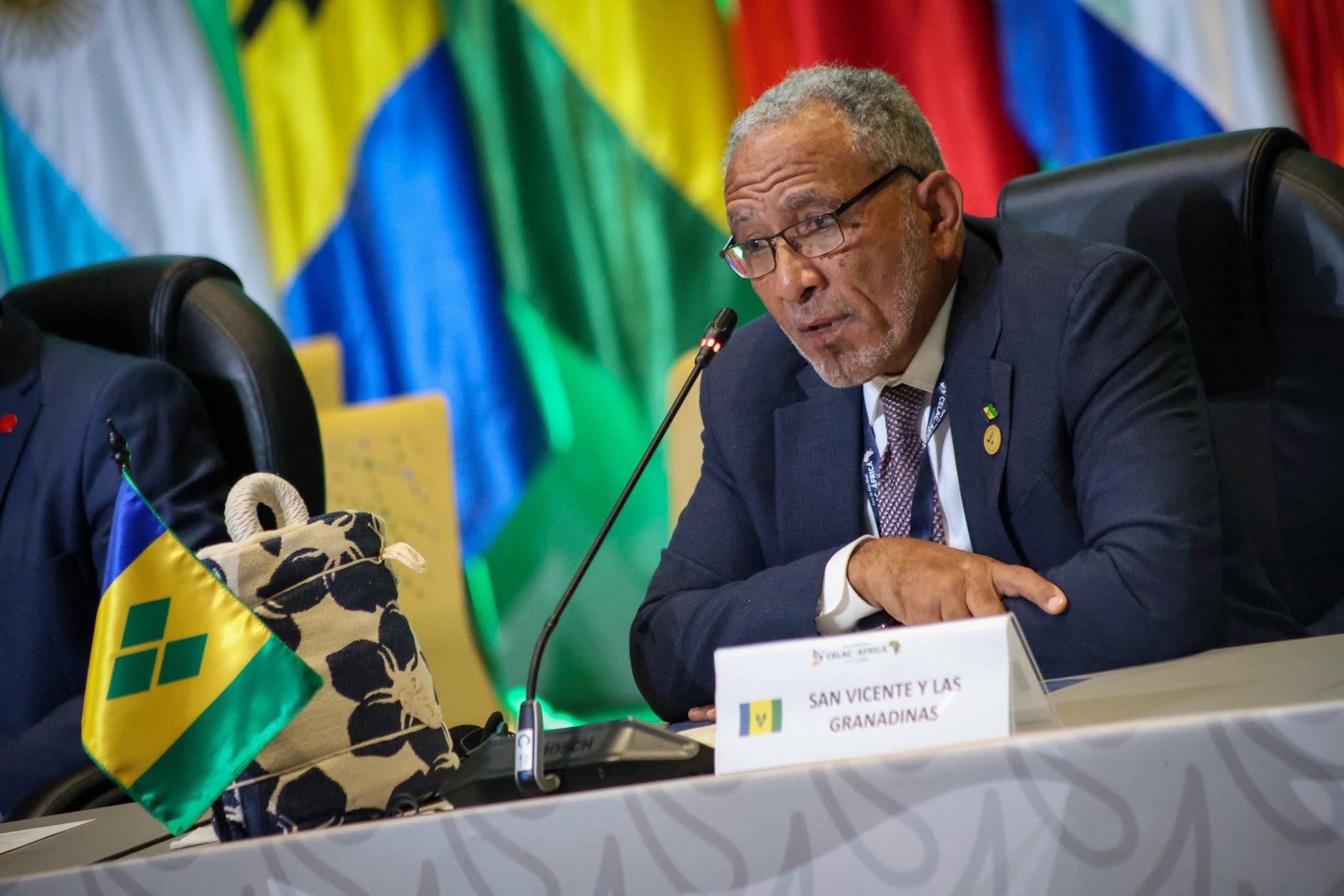
But the possibility of a ruling against Friday raises an unusual question for a government that is still less than a year old: could the NDP remain in power while having to find another prime minister?
The answer would depend on the court’s eventual ruling and the constitutional consequences that follow.
The petitions are being heard by Justice Gertel Thom. When proceedings adjourned in July, the petitioners had not completed their case. The matter is scheduled to continue from August 31 to September 4.

The constitutional dispute centres on Section 26, which sets out circumstances in which a person is disqualified from being elected or appointed to Parliament. One of the provisions concerns a person who, by their own act, is under an acknowledgement of allegiance, obedience or adherence to a foreign power or state.
The petitioners say that provision applies to Friday and Bramble because of their Canadian citizenship.

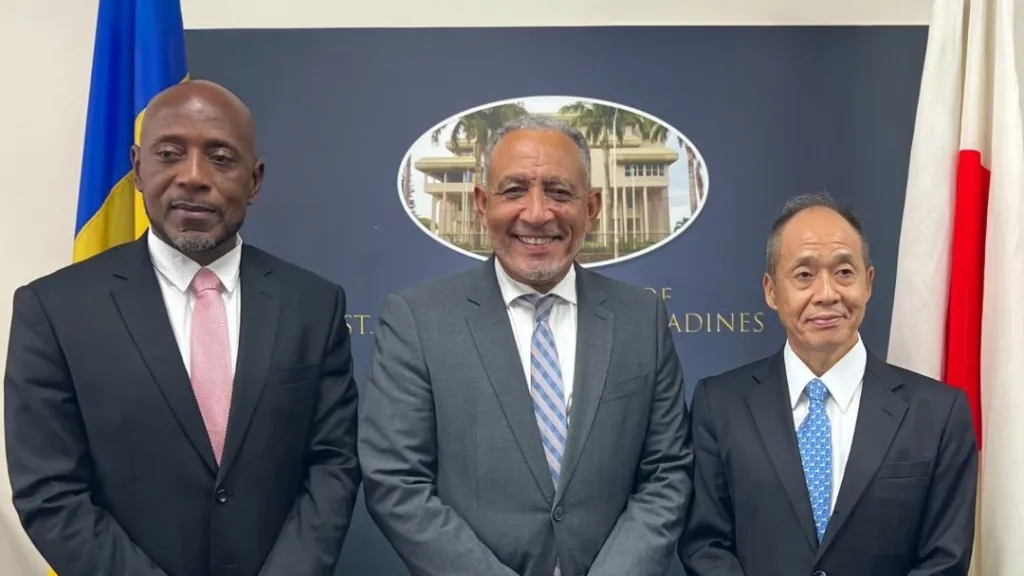
The government’s position is that the constitutional provisions do not disqualify the two men from holding their seats.
The court has yet to determine which interpretation is correct.
The case has already generated a wider political dispute over citizenship and constitutional reform.
Earlier this year, the government moved towards amendments dealing with constitutional and electoral provisions connected to the issue. The proposals drew opposition criticism and were subsequently paused, adding to the controversy surrounding the court proceedings.
For Friday, the immediate objective is straightforward: defend the validity of the seat that he won in November.
If he succeeds, the political uncertainty disappears for now.
If he does not, the consequences become more complicated.
A ruling affecting Friday’s seat would not automatically bring down the NDP government. The party has 14 elected representatives and therefore retains a commanding majority in the House.
Instead, the question could become who within the NDP is able to command that majority.
Deputy Prime Minister St Clair Leacock would be an obvious figure to watch.


Leacock is an elected member for Central Kingstown and one of the government’s most senior ministers. He currently serves as deputy prime minister, as well as minister with responsibility for national security, disaster management and immigration.
There is no indication, however, that an NDP leadership change is underway.
Leacock has not been announced as Friday’s successor, and Friday has given no indication that he intends to step aside.
Much depends on what the court ultimately decides.
Even a successful petition would not necessarily mean that a new prime minister is appointed immediately. The status of the affected parliamentary seat, any further court proceedings and the constitutional process for appointing a prime minister would all have to be considered.
That makes September important, but not because a change of government is expected by then.
The hearings scheduled for August 31 through September 4 could advance a case that has the potential to affect the country’s political leadership, but there is no guarantee that the court will deliver a final judgment during that period.
For the opposition, the petitions represent a direct legal challenge to two of the government’s most prominent elected officials.
For the NDP, the stakes are personal as well as political. Friday led the party to its first general-election victory and now faces a court challenge to the seat from which he entered Parliament.
The case also raises a broader constitutional issue that is likely to remain relevant beyond the fortunes of the two men: how SVG’s law treats citizens who hold Vincentian and foreign citizenship when they seek elected office.
That question will ultimately be answered by the court.
Until then, Friday remains prime minister, the NDP remains in government and Leacock remains deputy prime minister.
But with the election petitions returning to court at the end of August, the possibility of an unexpected change at the top of SVG’s government is no longer something political observers can simply dismiss.
The next major development comes on August 31 2026.
The election petitions remain before the court, with no final ruling issued. Any discussion of a possible change in Prime Minister reflects potential scenarios, not a prediction or confirmed outcome.


