



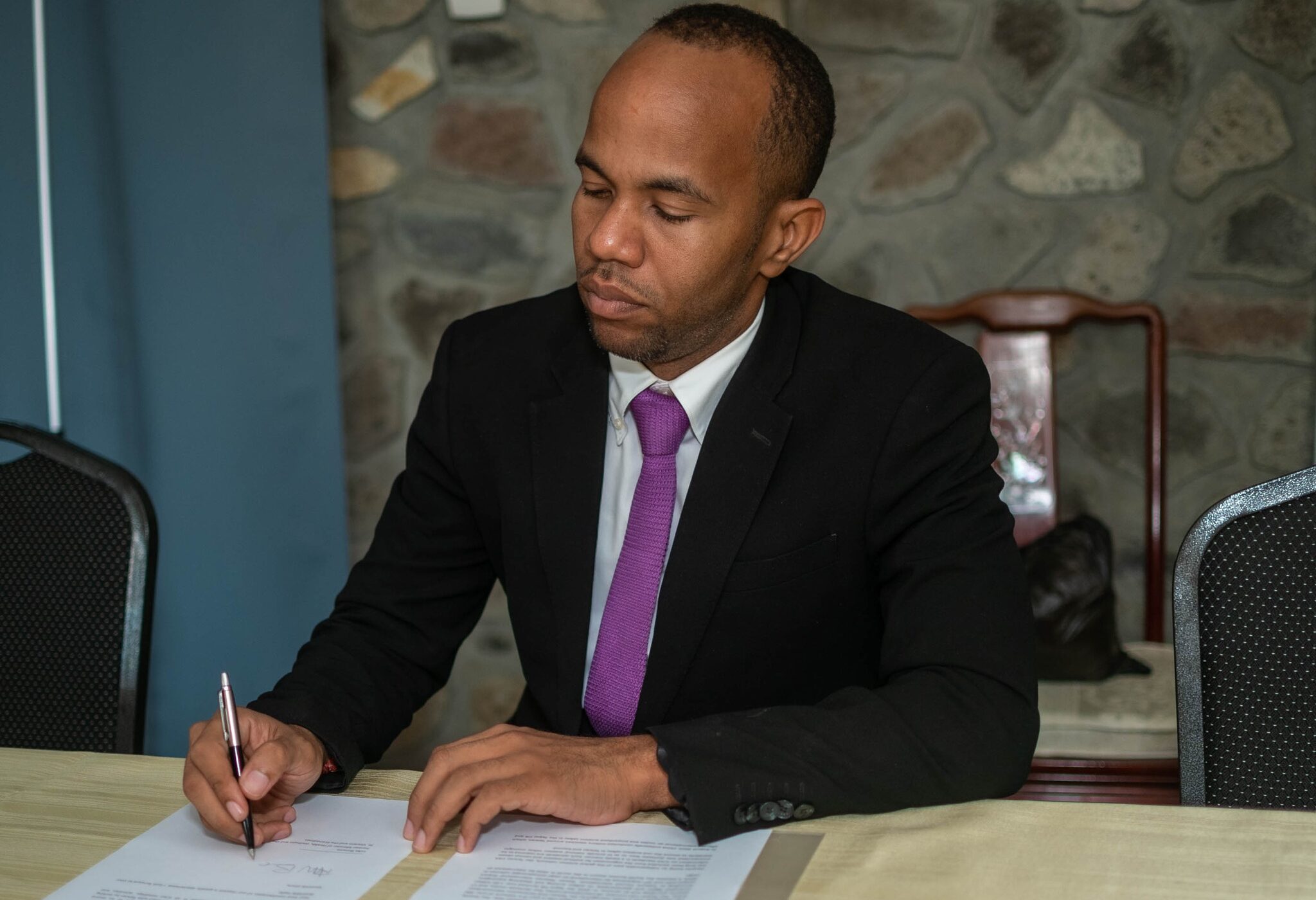
After another electoral defeat, Luke Browne is once again at the centre of national political discussion — not from the campaign trail, but from the courtroom.
Browne, who lost his bid for the East Kingstown seat in the November 2025 general election, is now one of the petitioners challenging the eligibility of Prime Minister Dr Godwin Friday and Foreign Affairs Minister Fitzgerald Bramble.
The case now before the High Court has ignited debate over whether dual citizenship disqualifies elected officials under Section 26 of the Constitution.
But beyond the legal arguments lies a growing political narrative: if the court rules in favour of the petitioners, Browne himself could end up in Parliament.
That possibility, while legally grounded, is far from certain.
Luke Browne’s latest move follows his unsuccessful attempt to unseat Bramble in East Kingstown — one of several defeats at the polls.
Now, alongside fellow petitioner Carlos James, he is asking the court to declare that the Prime Minister and Bramble were not qualified to contest the election due to their Canadian citizenship.
The argument is simple but significant: by holding foreign citizenship, the officials may have acknowledged allegiance to another state something the Constitution prohibits for parliamentary representatives.
The political stakes were raised when it was suggested that if the court finds the elected officials were disqualified, the losing candidates including Luke Browne could be declared MPs instead.
That interpretation has fuelled speculation that Browne could enter Parliament without winning an election outright.
However, legal observers caution that this outcome depends entirely on how the court rules and on strict constitutional interpretation.
At the core of the dispute is Section 26 of the Constitution, which bars anyone who owes allegiance to a foreign power from serving as an MP.
Lawyers involved in the case have emphasised that the Constitution overrides all other laws, making eligibility a legal — not political — question.
But the issue is not entirely straightforward.
Some legal interpretations argue that the Constitution allows Commonwealth citizens to run for office, raising questions about whether all forms of dual citizenship automatically disqualify a candidate.
This tension has made the case one of the most closely watched constitutional battles in recent years.
At the core of the dispute is Section 26 of the Constitution, which bars anyone who owes allegiance to a foreign power from serving as an MP.
Lawyers involved in the case have emphasised that the Constitution overrides all other laws, making eligibility a legal — not political — question. But the issue is not entirely straightforward.
Some legal interpretations argue that the Constitution allows Commonwealth citizens to run for office, raising questions about whether all forms of dual citizenship automatically disqualify a candidate.
This tension has made the case one of the most closely watched constitutional battles in recent years.
Despite the potential implications, Prime Minister Friday has appeared relaxed about the proceedings, brushing off concerns as the case moves through the courts.
The government maintains that the election result reflects the will of the people, while its legal team argues that the petitions attempt to overturn that mandate through the courts.
The High Court is expected to hear the matter in full later this year, with trial dates already set.
If the ruling goes against the sitting MPs, it could trigger a major political shake-up — potentially altering the composition of Parliament and raising broader constitutional questions.
For Browne, the case represents both an opportunity and a risk.
While a favourable ruling could open the door to Parliament, there is no guarantee the court will interpret the law in a way that benefits him.
For now, Browne’s path to becoming an MP remains tied not to the ballot box, but to the bench.
And as the country watches the courts, one thing is clear: in St Vincent and the Grenadines, political ambition alone is not enough — the Constitution has the final say.


